
Hybrid Teaching
Hybrid teaching combines face-to-face and online learning experiences within the same course. In a hybrid course, some learning activities occur in person while others occur online. The online components are intentionally designed to replace a portion of face-to-face instructional time rather than simply adding additional work for learners.
Hybrid teaching can provide opportunities for flexibility, active learning, increased access to course materials, and continued learning beyond the classroom. Depending on the course design, hybrid teaching may incorporate synchronous and asynchronous activities, collaborative learning experiences, digital tools, recorded content, discussions, and self-paced learning opportunities.
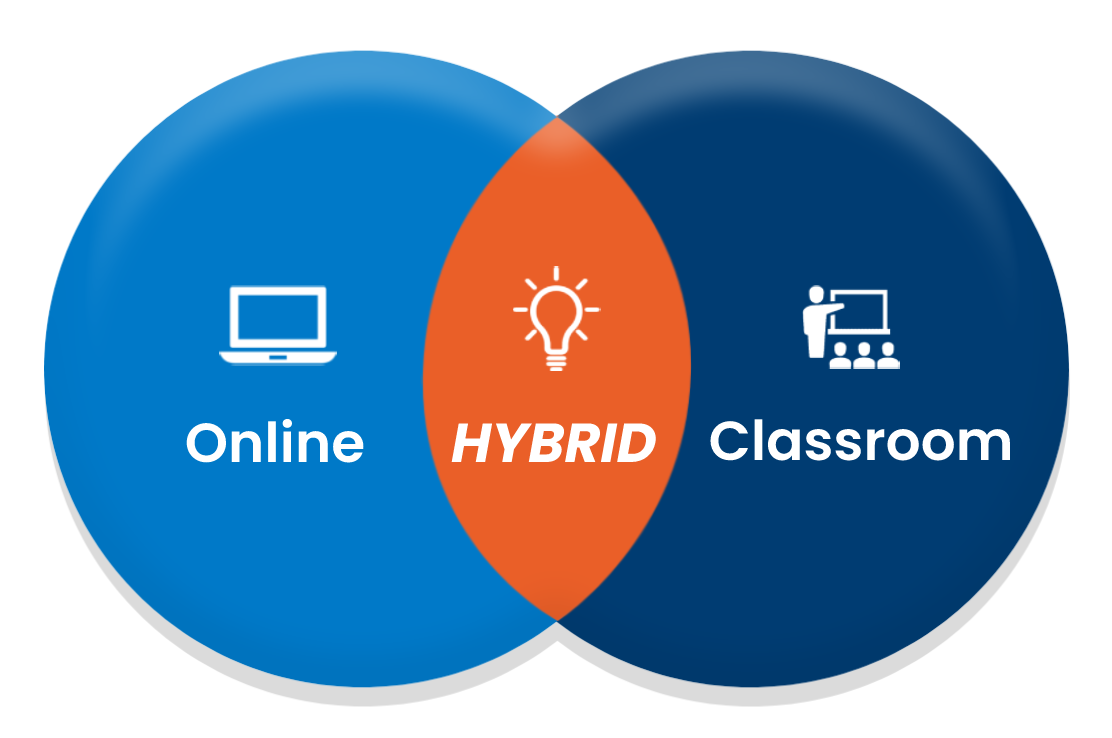
Characteristics of Hybrid Teaching
Hybrid teaching combines elements of face-to-face and online learning environments. While hybrid approaches can vary across courses and disciplines, many hybrid learning experiences share several common characteristics.
Integrated Learning Experiences
- Face-to-face and online learning activities are intentionally connected and complementary
- Learning may continue across multiple environments rather than being limited to classroom time
- Activities and assessments should align across instructional spaces and learning experiences
Flexible Learning Opportunities
- Hybrid teaching can provide flexibility in how and when learners engage with course materials and activities
- Online activities may occur synchronously or asynchronously depending on course design
- Learners may benefit from opportunities for review, reflection, and self-paced engagement
Technology-Supported Learning
- Hybrid courses often incorporate digital tools and learning technologies such as Canvas, video conferencing platforms, and multimedia resources
- Technology can support communication, collaboration, participation, assessment, and content delivery
- Digital tools should be selected intentionally to support learning outcomes and learner needs
Intentional Course Design
- Effective hybrid teaching requires careful planning of both online and face-to-face components
- Communication, navigation, participation expectations, and course organization should be clearly communicated to learners
- Workload expectations should remain balanced and manageable across learning environments
Best Practices for Hybrid Teaching
Effective hybrid teaching involves intentionally designing learning experiences that support engagement, accessibility, communication, flexibility, and meaningful interaction across both face-to-face and online learning environments.
Communicate Clearly
- Clearly communicate schedules, participation expectations, technology requirements, and instructions
- Help learners understand which activities occur online and which occur face-to-face
- Use consistent announcements, reminders, and course organization to support navigation and communication
Design for Engagement
- Create opportunities for participation, collaboration, interaction, and feedback
- Incorporate active learning strategies such as discussions, polls, collaborative activities, and problem-solving tasks
- Consider how learners will build connection and community across learning environments
Support Accessibility and Flexibility
- Provide materials in accessible and organized formats where possible
- Consider learner access to technology, bandwidth, time, and learning environments
- Offer opportunities for review, reflection, and self-paced engagement when appropriate
Use Technology Intentionally
- Select technologies and digital tools that align with learning outcomes and instructional goals
- Avoid adding unnecessary tools or complexity that may increase cognitive load
- Provide guidance and support to help learners effectively use required technologies
Examples of Hybrid Course Models
Hybrid teaching can be implemented in different ways depending on course goals, scheduling, learner needs, available technologies, and the nature of learning activities.
Rotation or Alternating Model
- Learners alternate between face-to-face instruction and online learning activities
- Different groups may attend in person on different days while engaging in asynchronous activities at other times
- This model can help support flexibility, scheduling, and classroom capacity need
Synchronous Hybrid Model
- Some learners participate in person while others participate remotely during the same class session
- Classroom technologies such as microphones, cameras, and conferencing tools support simultaneous participation
- This model requires intentional facilitation strategies to support engagement across participation modes
Asynchronous Hybrid Model
- Face-to-face learning experiences are combined with self-paced online learning activities
- Online learning may include recorded lectures, discussions, multimedia resources, quizzes, or reflective activities
- This model can provide learners with additional flexibility in how and when they engage with course materials
Platforms
The advancement of technology has better facilitated hybrid learning. Class times can now be shortened and/or used for activities that better lend themselves to face-to-face interaction. Equipped with the right technology, instructors can effectively bridge the gap between face-to-face and remote learners. Instructors also need innovative tools in order to drive participation and collaboration among learners. To be effective in a hybrid setting, instructors need to ensure that every learner can be seen and heard regardless of learning space or location.
Ontario Tech University has deployed numerous educational technologies that can empower this type of effective hybrid learning experience. Some of the technology includes:
Ontario Tech Supported Tools
Ontario Tech University provides several educational technologies that can support hybrid learning experiences, including:
Visit the Educational Technology page for more information about institutionally supported tools that can help facilitate hybrid learning.
Additional Resources
- UBC Centre for Teaching, Learning and Technology. (2020). Discussion Paper on Hybrid Teaching and Learning. Retrieved from https://ctlt.ubc.ca/files/2021/01/CTLT_HybridTeachingLearning.pdf
References
Key Effective Practices in Blended and Hybrid Courses. (n.d.). University of Guelph Office of Teaching and Learning.
Teaching Modalities. (n.d.). Centre for Teaching and Learning, University of British Columbia Okanagan.